Skip to product information
1 of 6

Swift Blocker

Swift Blocker Mini 75

Swift Blocker Mini 75

Regular price $210.00 USD
Regular price Sale price $210.00 USD
Sale Sold out
Shipping calculated at checkout.

6 total reviews

Quantity

Quick Facts

Blocks per press 75
Finished block size ~0.9" (same block as the Commercial 200)
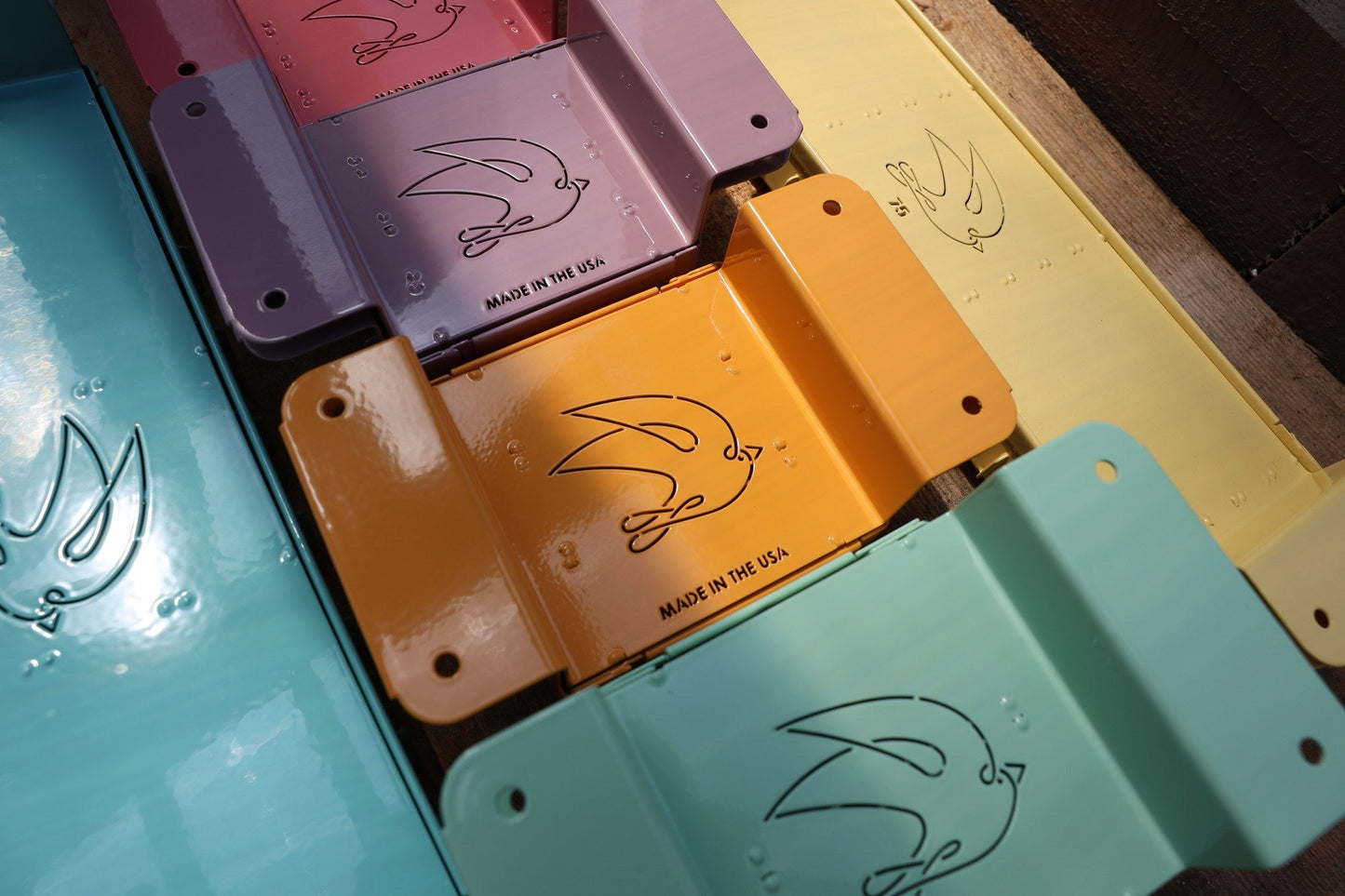
Color Yellow
Block footprint 4.5" × 14"
Operation Hand-operated
Dibbles Stamped, permanent
Material Stainless steel
Made in Michigan, USA (100%)
Ships in 1–2 business days

Our most economical model, the Mini 75 makes the same size block as the Commercial 200 in a much smaller footprint — for growers using smaller trays, or who simply need fewer blocks at a time. The blocks land in a 4.5″ × 14″ footprint, which drops neatly into a standard cafeteria tray.

Open-sided blocks air-prune their roots: instead of circling the wall of a plastic cell, each root tip stops at the edge and branches, building a dense rootball that slides into the garden with almost no transplant shock.

Simple and hand-operated, with stamped permanent dibbles that press a clean, even seed dimple in every block — nothing to fit, lose, or replace. The finished 75 soil blocks are approximately 0.9″ in size.

One piece of stainless steel, made in southeast Michigan — a tool you buy once. In stock, ships in 1–2 business days. Please wear gloves while blocking to keep hands safe.

View full details
Grower-tested

Why growers reach for a Swift Blocker

A soil-blocked seedling at transplant time — dense roots, air-pruned at the edges, no circling

Roots that move without the shock

When a root hits the open edge of a block, air stops it — so seedlings build a dense, fibrous rootball instead of circling. They transplant like they barely noticed the move — most starts ready to plant out in about four weeks.

Seed before you eject

Sow the whole tray, dust with vermiculite, then press the blocks out. Faster than dip-and-press blockers — and impossible with them.

Kind to your hands

The lift-to-eject action skips the squeeze — no strain on the hand or wrist. Growers with carpal tunnel or arthritis tell us it's the difference that lets them keep sowing.

Made once, in Michigan

Stainless steel, handmade in southeast Michigan. A buy-it-once tool built to outlast a shelf of plastic trays.

Quick facts

Block size
0.9″
Cells per tray
75
Footprint
4.5″ × 14″
Material
Stainless steel, handmade in Michigan
Lead time
In stock — ships in 1–2 business days
Best for
Same block size as Commercial 200; high density
  • 5 stars: 5 (83%)
  • 4 stars: 0 (0%)
  • 3 stars: 1 (17%)
  • 2 stars: 0 (0%)
  • 1 star: 0 (0%)
K
Kathryn Burgess

I normally don't take the time to write reviews, but I was very happy with this company, so I needed to say a few words. They have great customer service! My Swift blocker shower up with an issue where I couldn't use it. I contacted the company and they swiftly took care of the problem. I appreciate their service and commitment to their customers. Thank you for a fine product...

M
Mary Pat Mitton

Five stars.

C
Charles Struthers

I've had the chance to use the Swift Blocker Mini 75 a few times now. It's fairly easy to use and rapidly produces 1" soil blocks. I was able to produce around 1800 blocks in just a few hours with around 10 gallons of mix. I use a basic formula of 1 part compost, 1 part peat + lime, .5 part perlite, .75 part water, with a few amendments. You can scale this to any size that works for your setup. I'd highly recommend the Swift blocker for anyone looking at making bulk soil blocks. And looking forward to picking up some of the other units soon!

J
Jason Kamp

Swiftblocker is a big win for any farmer or gardener who wants to support American-made small business, reduce plastic use, and improve efficiency and quality of seed starts. The blocker is a heavy, sturdy well-made tool. The learning curve is steep, and the personalized customer service experience is top notch.

S
Staci hunter

Five stars.

p
pongsupha Holmquist

It’s quite hard to squeeze out the blocks. I don’t know if I got the mixer right but I’ll keep on trying